Photography and Sustainability Communications
This year, requests of support for sustainability communications has increased dramatically, in part because many organisations signed-up to the UN Sustainable Development Goals and set themselves carbon reduction, waste and social impact goals to be achieved by 2030 – which is now just over four years away.
What I’ve learned this year through working with many businesses in different sectors is that knowledge of a subject doesn’t always mean you can communicate effectively. In fact, sometimes knowledge gets in the way. This is known as the ‘curse of knowledge’ whereby it is assumed that everyone has the same level of knowledge as you – but often we don’t. Your knowledge of carbon metrics may be excellent but to others carbon emissions are an intangible concept.
This means that I’ve seen sustainability teams who have become demoralised. The team are making great progress – not enough on their own – but definitely in the right direction. However, when it comes to communicating to try and inspire others or change behaviour, it feels like they are not being heard, or that that are talking in a different language.
Even when they use images and visuals, it seems like they aren’t connecting with the audience, and that might be because they’ve using the same stock photographs as everyone else.
Stock photography is like an AI generated CV – people perceive it to be dishonest. It doesn’t do anything to build trust or respect.
What people want to see in any form of internal communication, is something they can relate to and that means building an image library of your own that reflects the business and the people in it.
Sustainability is a story
People don’t need more data in their lives, they want stories. Preferably, they would like visual stories because these are easier and faster to interpret, and they are more memorable than text alone. This is called the picture superiority effect, which I’ve written about here.
Images can turn abstract concepts into something that is tangible and relatable.
If you work in sustainability then you know that you’ve been on a journey, one that is probably still continuing. That’s a story that you can tell.
- What was the starting point?
- What have you focused on?
- Why those areas?
- What has happened?
- What has the impact been?
- Where are you going next?
This is a tried and tested movie script structure – context, the action, the result/outcome.
When you show photographs of retrofit work happening across offices, or you see what happens to the waste you segregate, or you share a visual story of how your support in the supply chain has changed lives, your colleagues will get it. They will begin to understand the effort, progress and impact that sits behind the graphs and tables.
Visual evidence in the form of photographs makes sustainability relatable.
Yes, you can also use video but video is more expensive and less versatile.
Why you should build an image library for sustainability communications
A library of authentic photographs is one of the easiest ways to make sustainability more visible, and therefore a tool in helping you to change behaviour.
It will help your teams to understand your shared objectives and why they matter. It means that they can also see how they can support you.
An image library provides you with the assets you need to communicate confidently and consistently. Photographs are versatile. They can be used in reports, presentations, videos, newsletters, the intranet, posters, booklets and more.
That’s the great thing about an image library – the value you can get from it.
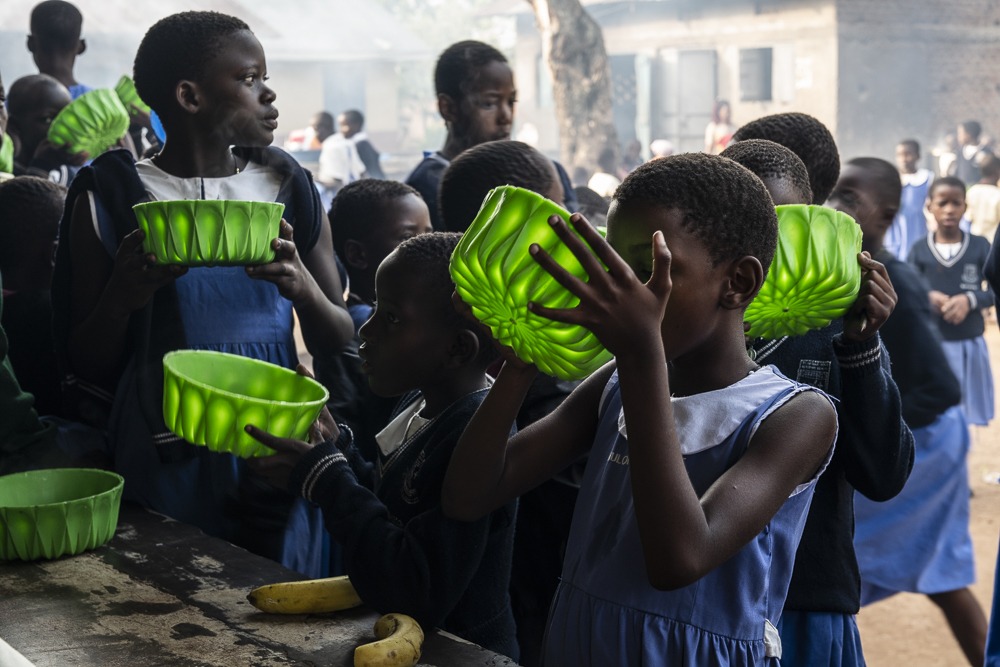


The types of projects I’ve been photographing this year have included:
- How waste is actually recycled
- Biodiversity initiatives around offices and warehouses
- Sponsorship of projects in Africa aimed at breaking the cycle of poverty
- Documenting retrofit works including low energy lighting, water-cooled HVAC and more
- Community engagement projects
- Investment in education in the supply chain to improve safety and quality of life
- Demonstrations of the behavioural changes that reduce energy consumption
This is not an exhaustive list but includes the main themes that many businesses are striving to achieve – waste, carbon, community, safety, poverty.
Building a library takes time but once you have the images they will be useful for years.
Andrew Cameron – Documentary Photographer for Sustainability Communications
I am a documentary photographer (and writer) who works with retailers, the construction sector, manufacturing, and agriculture to engage audiences about change, sustainability, ways of working and project progression.
I work with my clients to build image libraries that can be used to create compelling visual stories that support employee communication, investor relations and external stakeholder engagement.
Find out more about the services I offer here.